Configure a website output
Last updated: July 12, 2026
Configure a website output
Use a website when the output should become a navigable page or lightweight public/internal microsite rather than a static report.
Choose the output type
Open the Output step in the agent builder and choose the artifact the agent should produce every run.
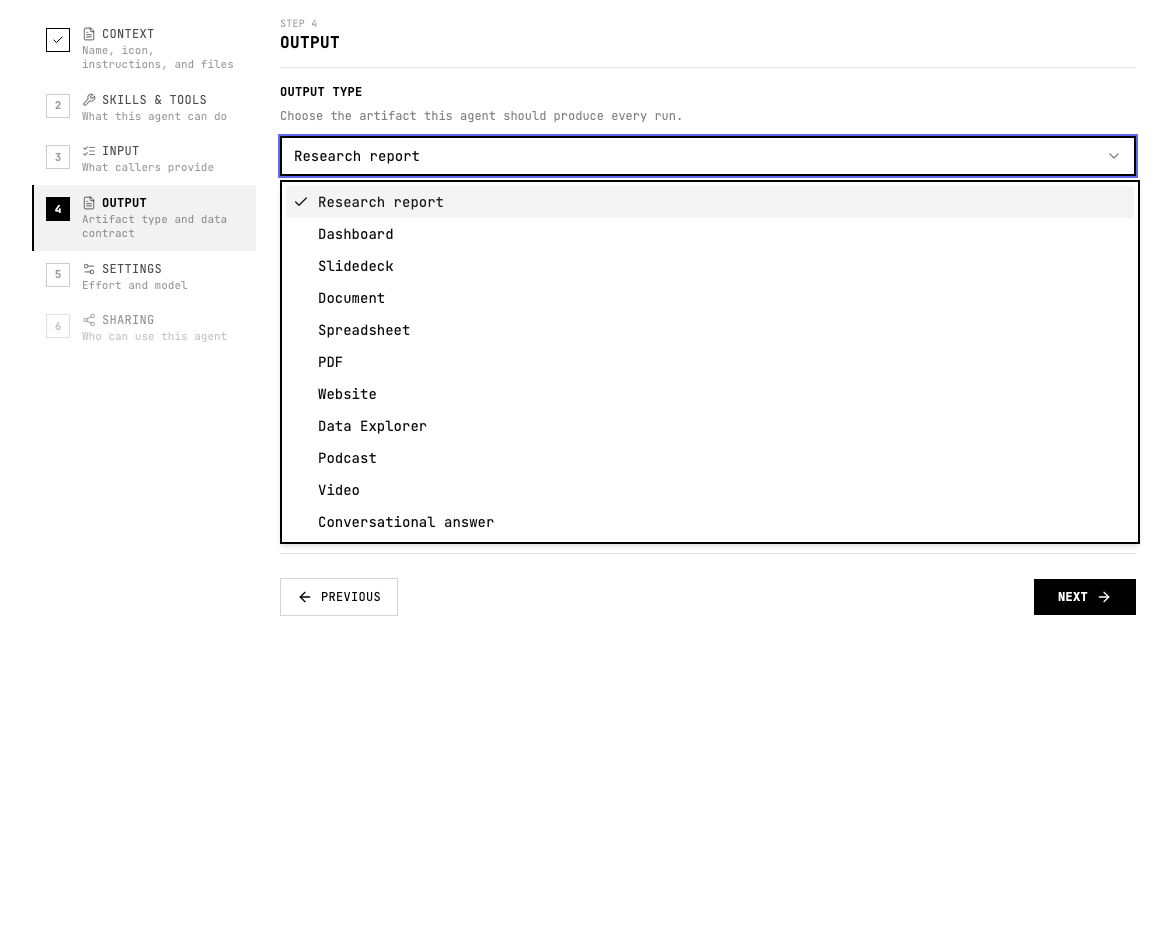
When to use Website
- Readers need to browse sections, jump between findings, or share a page.
- The output benefits from layout, navigation, and visual hierarchy.
- The work is informational or editorial rather than a strict audit packet.
Configure Website
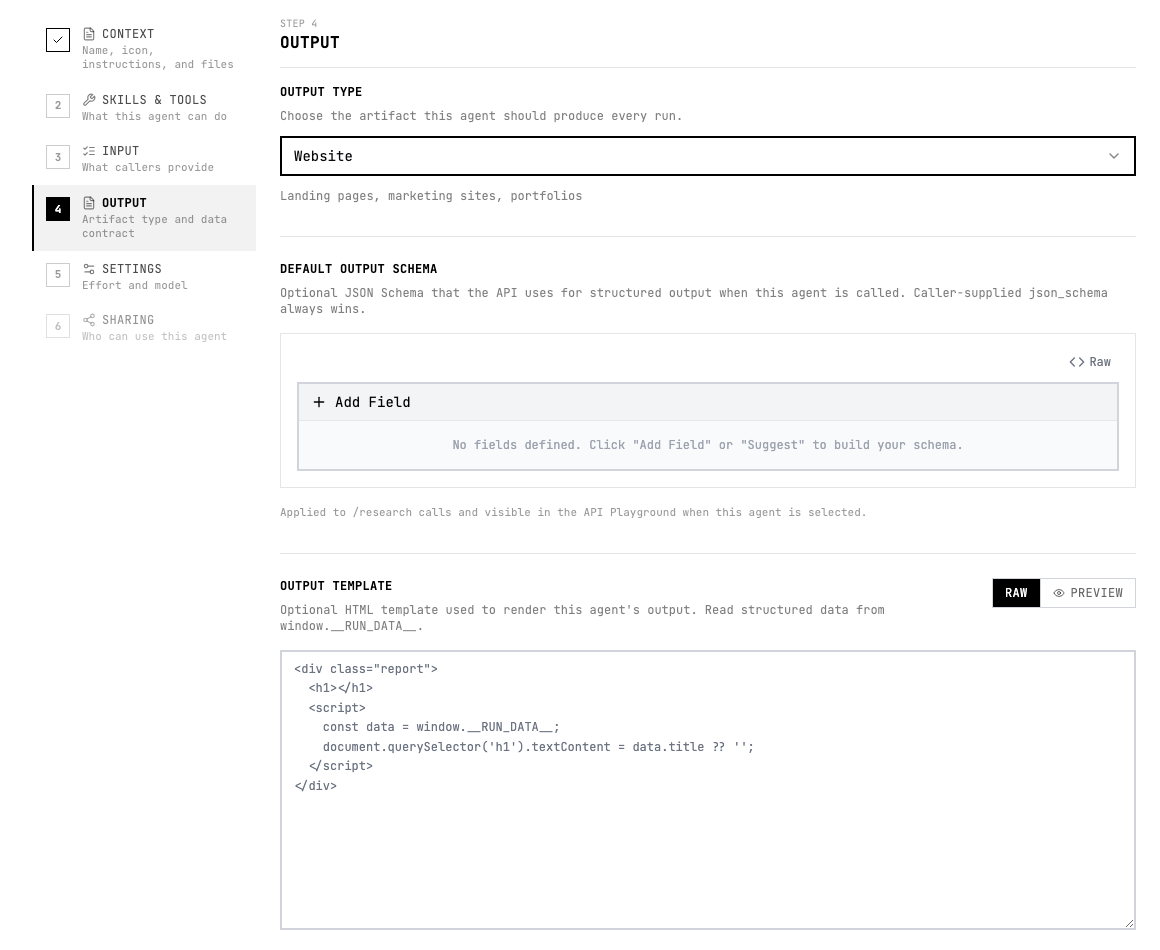
- Choose Website in the output type menu.
- Define the sections, navigation labels, target audience, and what should appear above the fold.
- Keep claims source-backed and tell the agent which parts should be concise versus detailed.
Instruction pattern
Add a short output instruction to the agent instructions or the relevant skill so the agent knows what good looks like.
Create a concise website with clear navigation, a top summary, sections for findings and evidence, and a source-backed conclusion.Quality checklist
- The audience and use case are clear.
- The output format is selected before testing.
- The agent instructions describe the expected sections, fields, or scenes.
- Important claims include evidence or source links.
- The output can be reviewed without guessing what each field or section means.
- If another system consumes the result, the schema and allowed values are stable.