Use structured JSON output
Last updated: July 12, 2026
Use structured JSON output
Use structured JSON when an agent result needs to feed an API workflow, database, review queue, spreadsheet, or another system. The output type controls the artifact, while the default output schema controls the stable data contract for API calls.
Start in the Output step
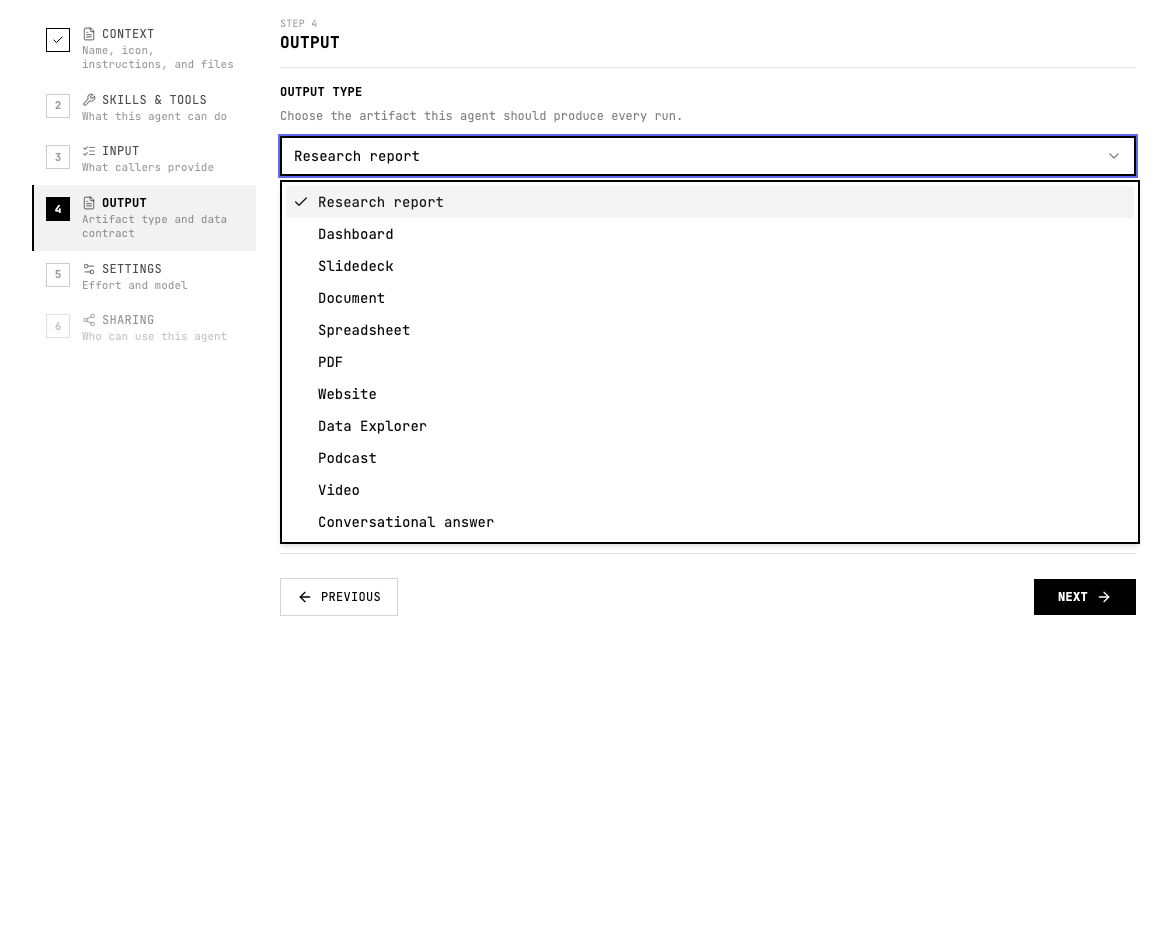
Choose an artifact and define fields
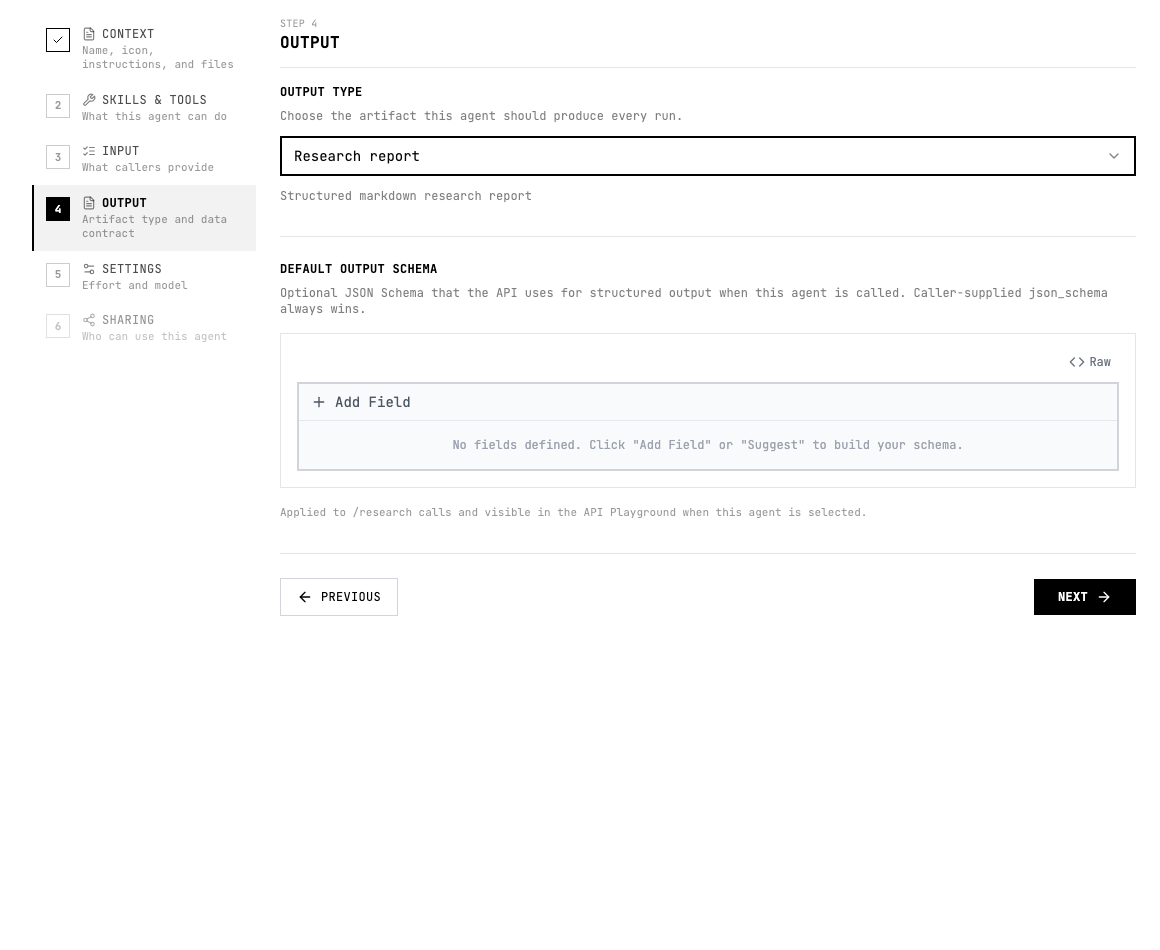
Use a schema when field names, allowed values, and required evidence need to stay consistent across runs.
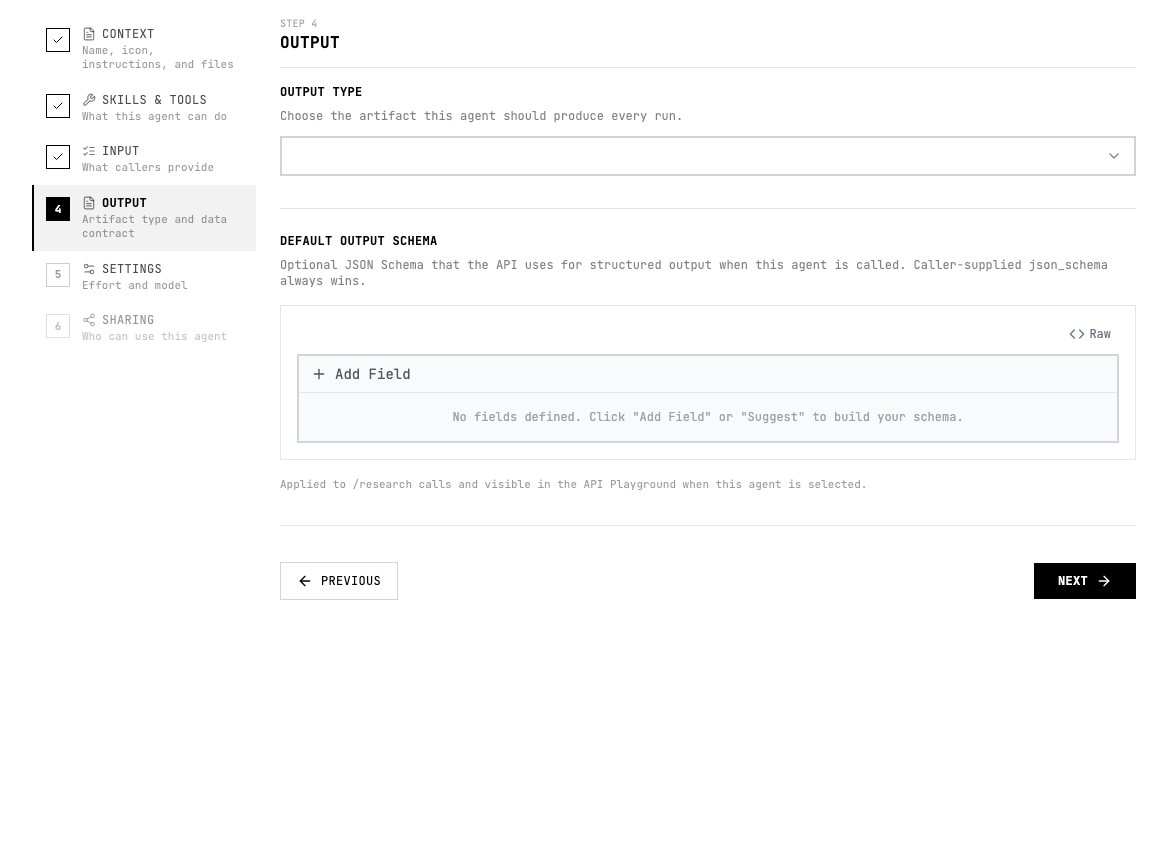
Schema design rules
- Use stable field names that downstream systems can rely on.
- Prefer enums for status, severity, recommendation, and confidence bands.
- Separate the short answer from the supporting rationale.
- Include source fields for evidence-heavy workflows.
- Mark fields required only when every run can realistically provide them.
- Keep deeply nested structures for genuinely nested data, not for decoration.
Example schema
{
  "recommendation": "approve | review | escalate",
  "confidence": "low | medium | high",
  "rationale": "Short explanation of the decision",
  "evidence": [
    {
      "source": "Source name",
      "url": "https://example.com",
      "finding": "Relevant evidence"
    }
  ],
  "missing_information": ["Any blocking gaps"]
}